
The Audience Moved On. Why Hasn’t Your Strategy?

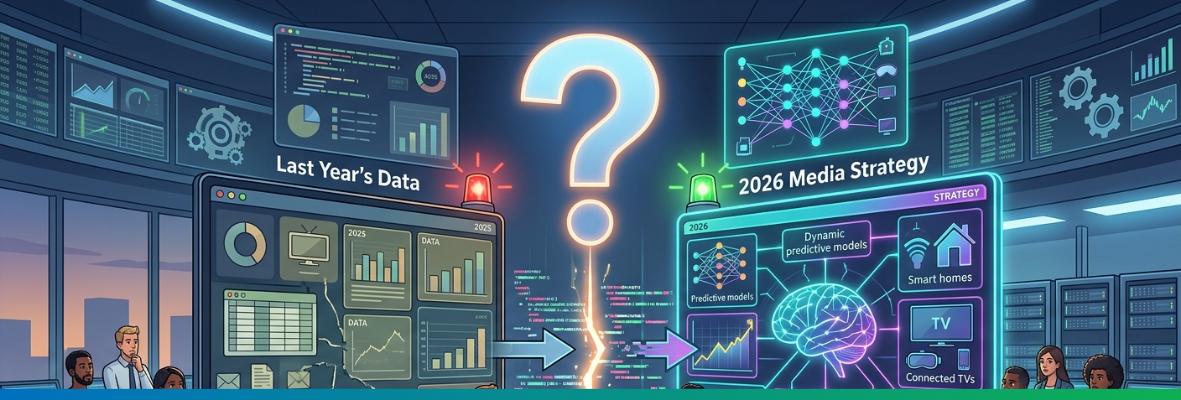
Let’s be honest, most media plans still start with a spreadsheet that looks suspiciously like last year’s. Same segments. Same assumptions. Same channels. The audience may have moved on, but the strategy? Not so much.
Here’s the uncomfortable truth: many programmatic workflows remain rooted in post-campaign analysis. Activation happens in one place, measurement in another, and insight arrives only after outcomes are set. In a media environment defined by real-time signals and tighter budgets, that lag is becoming increasingly unsustainable.
So what’s actually changed in 2026, and why does it matter for your media strategy?
The Audience Has Evolved. Has Your Data?
Your audience moves between screens all day: display, video, CTV, audio, and DOOH. Today, first-party data runs the show. Consent-based CRM and site data power lookalike modelling, creative logic, and measurement, often without exposing raw user records.
If you’re still running on third-party segments from last year, you’re not targeting an audience; you’re chasing one that’s already left the room.
What the Smartest Buyers Are Doing Differently:
- Leaning into first-party data as a strategic asset: 61% of advertisers now have an active first-party data strategy in place, up from just 37% in 2023, nearly doubling in three years, according to the IAB State of Data Report 2026.
- Making real-time decisions, not rear-view ones: AI systems now automatically adjust bidding, budgeting, and creative delivery based on live performance data; the old model of weekly optimisation cycles simply can’t compete.
- Moving beyond broad categories to precision targeting: Instead of reaching someone generally interested in a topic, data-driven programmatic enables highly specific audience targeting, with CTV standing out as a channel worth serious investment. Programmatic CTV ad spend in the US alone is projected to reach $29.3 billion in 2026, a 34% increase over 2025 levels.
- Pairing open exchange reach with curated quality: Curated inventory packages give advertisers more visibility into where ads appear and how supply paths function, helping reduce inefficiencies, with 41% citing curated deals as a path to higher ROI.
This Is Where Voise AudienceIQ Comes In
At Voise Tech, we built Voise AudienceIQ specifically for this moment. It’s a precision audience segmentation engine powered by first-party signals, contextual intelligence, and real-time activation without sacrificing privacy compliance.
What makes it different?
- Dynamic Segmentation Models: Pre-built and evolving taxonomies based on demographics, interests, and intent signals, plus real-time lookalikes from live campaign data. No starting from scratch.
- Contextual Intelligence Layer: NLP and semantic analysis that matches ads to content in real time, keeping you cookieless-compliant without giving up targeting precision.
- Real-Time Activation: Segments stay fresh based on live bidding and campaign signals, not data that was accurate six months ago.
- Custom Audience Builder: Unify your own CRM data with real-world signals to build laser-focused targeting strategies that are actually yours.
It plugs directly into the Voise DSP, Adserver, and Planning Tool so intelligence flows through every impression, not just the planning deck.
The Bottom Line
In 2026, programmatic ad targeting is no longer a tactical add-on to digital media buying; it is the primary infrastructure powering performance marketing strategy. First-party data-driven campaigns achieve up to 50% higher ROI, and 70% of advertisers report improved targeting accuracy when using first-party data. The brands seeing results aren’t the ones with the biggest budgets. They’re the ones with the most current, actionable, and intelligently activated data.
If your 2026 strategy is still anchored in 2025’s assumptions, now is the time to revisit it.
Ready to target smarter, not harder?
Your audience isn’t waiting. Neither should your strategy. Let’s build a data strategy that’s built for right now.

